
Madeira Over 50s Holidays: Independent Review 2026
Independent Madeira review for UK travellers over 50: walking, hotels, food, borders, and healthcare.


Madeira has quietly become one of the strongest package holiday destinations for UK travellers in their fifties and sixties, and most of the reasons why never make it into the standard brochure. Flat coastal walking that runs for two miles. A food culture built on wood-grilled espetada and deep-water scabbardfish that rivals anywhere in southern Europe. Heated seawater lidos instead of a conventional beach. All sit alongside a climate mild enough to earn Madeira its old nickname, the Island of Eternal Spring.
This review sets out to answer the questions that determine whether Madeira is the right choice for you, when weighed against the destinations most people compare it to: Tenerife, Paphos, and Lanzarote.
- How walkable is the seafront, really, and what happens when you leave it?
- What happens if you need to see a doctor in Madeira?
- How long will EES biometric queues take at the airport this year?
- Is the food worth leaving the hotel for, and where do you go?
- Which hotels in the 2026 Jet2holidays, easyJet holidays, and TUI inventories actually have walk-in showers?
How Does Madeira Compare to Tenerife, Paphos, and Lanzarote?
The three destinations most commonly weighed against Funchal by UK 50–70 travellers booking through the major UK operators.
| Madeira | Tenerife South | Paphos, Cyprus | Lanzarote | |
| Walking ease | Coastal Flat 1.2-mile Promenade do Lido. Steep inland almost immediately. Combined flat coastal route ~2 miles. Know before you leave the hotel zone. | Good Good in resort zones. Costa Adeje promenade comparable and longer. | Excellent Most reliably flat of the four. Level promenade 3.5km+. Flat throughout tourist zone. | Good Puerto del Carmen resort strip flat. Inland more rugged. |
| Local food and dining | Outstanding Espetada, espada preta, bolo do caco, distinctive Atlantic island cuisine. Exceptional value at mid-tier. Best food offering of the four. | Variable International resort food dominant. Canarian cuisine requires active seeking. | Distinctive Cypriot meze tradition. Good independent tavernas accessible on foot. | Limited Resort-led food. Less local character accessible on foot. |
| Direct UK flights | Year-Round From 6 UK airports (Gatwick, Luton, Stansted, Manchester, Bristol, Newcastle). Jet2, easyJet, TUI. | Year-Round Widest UK route network of the four. Strong all-year guarantee. | Year-Round From most UK regional airports. Strong from northern England and Scotland. | Year-Round Good year-round. Fewer UK city options than Tenerife or Paphos. |
| Hotel quality (4-star) | Premium-Led Excellent at the premium end. Mid-tier selection narrower than Tenerife or Paphos. | Strong Very strong 4-star stock. Largest mid-tier inventory of the four. | Strong Well-maintained 4-star stock. Good adults-oriented inventory. | Solid Solid 4-star options. Smaller overall inventory. |
| Value for money | Moderate Local dining exceptional value (3-course for two ~€45–57). Hotel costs higher than Tenerife or Lanzarote at equivalent standard. | Good Competitive all-inclusive market. Strong shoulder-season value. | Strong Strong at mid-tier. Best value May/Jun and Oct. | Good Competitive entry prices. Good all-inclusive value. |
| Adults-only availability | Thin Limited dedicated stock. Allegro Madeira is the primary adults-only option via major UK operators. | Good Good adults-only inventory in Adeje. More choice than Funchal. | Strong Five qualifying properties concentrated in Kato Paphos. | Moderate Some adults-only options. Smaller inventory than Tenerife. |
| EES queues 2026 | Applies Portugal is Schengen. Allow 1–2 hours on first visit. One-time registration, automated gates on all future Schengen entries. | Applies Spain is Schengen. Biometrics active from April 2026. | Exempt Cyprus is non-Schengen. Passport stamp only. No biometric registration. | Applies Spanish territory. Biometrics active from April 2026. |
| Healthcare | Good Hospital Dr. Nélio Mendonça (24hr A&E). GHIC accepted. Two private hospitals. Strong English proficiency. | Good Well-established. GHIC accepted. Large expat population. Strong English in private sector. | Standout General Hospital + two private hospitals. Dense pharmacy network. English throughout. | Adequate Smaller infrastructure. GHIC accepted. English-speaking private clinics. |
Madeira’s clearest advantage over its closest comparisons is the quality and accessibility of its local food culture: espetada and espada preta at mid-range prices put the dining experience on a different level from any Canary Island alternative. Its main trade-off against Tenerife is hotel inventory depth; Tenerife’s mid-tier 4-star stock is broader and its adults-only offering stronger. Against Paphos, the key difference is EES: Cyprus is non-Schengen and exempt; Madeira visitors face the one-time biometric registration. Once that first visit is complete, the advantage disappears, and Madeira’s food culture, climate, and walking infrastructure then speak for themselves.
Which UK Airports Fly Direct to Madeira?
Direct services to Funchal (FNC) operate from London Gatwick, Luton, Stansted, Manchester, Bristol, and Newcastle year-round, with seasonal additions from Birmingham, Bournemouth, and Edinburgh. Jet2, easyJet, and TUI all fly the route directly through their package holiday programmes. Flight times run from around three hours forty-five minutes from the south of England to four hours fifteen minutes from the north.
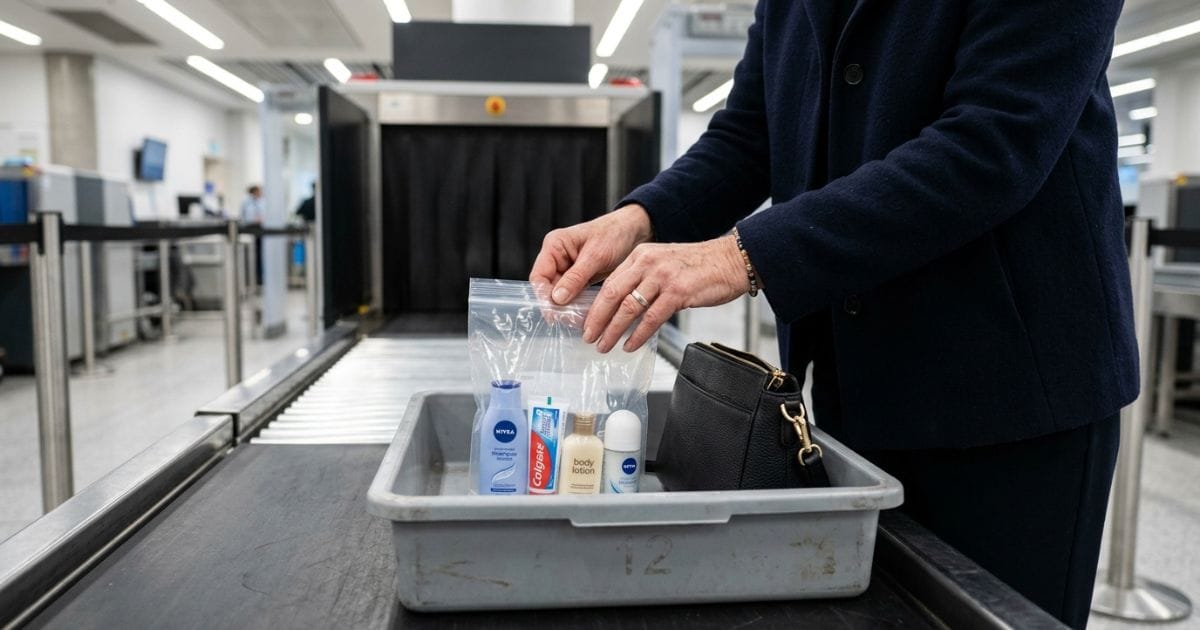
| UK Departure Airport | 2026 Liquids Rule |
|---|---|
| Heathrow · Gatwick · London City · Edinburgh · Birmingham | 2-Litre Allowed CT scanners confirmed. No sealed bag required. Liquids up to 2 litres permitted. |
| Manchester · Luton · East Midlands | 100ml Rule Standard clear bag required. 100ml per item limit still in force. |
| Bristol · Leeds Bradford · Newcastle · Glasgow | Unconfirmed Check your airport's website before travel, position not confirmed at time of audit. |
| On the return from Funchal, the 100ml rule applies at Cristiano Ronaldo International Airport regardless of your UK departure airport. | |
What Are the EES Biometric Border Rules for Madeira in 2026?
Most European destinations have had a difficult year on the arrival front. The EU’s Entry/Exit System EES went fully live across the Schengen zone in April 2026, introducing mandatory biometric registration for UK passport holders on their first entry. If you have travelled to Spain, France, or Portugal recently, you will know what this means in practice: fingerprints, facial scans, and queues that did not exist two years ago.
Madeira is in Portugal, which means EES applies. Queue times at Cristiano Ronaldo International Airport are currently running at one to two hours for first-time registrants. The practical implication is simple: allow two hours of buffer between landing and any first-day plans, and the rest of the holiday is entirely unaffected.
Do UK citizens need an ETIAS for Portugal in 2026? Not yet. ETIAS is scheduled for later in 2026 and has not been launched as of this publication. No pre-travel application is currently required.
One additional note for the return journey: Madeira Airport operates the strict 100ml liquid rule for outbound departures back to the UK, regardless of which airport you flew out from. If you have bought bottles of local wine, poncha, or full-size toiletries, they travel home in your checked hold luggage.
Arrival and Logistics: Bypassing the Coach Ordeal
The physical comfort of your holiday begins the moment you clear passport control. Most travellers default to the standard shared coach transfer included in their holiday package.
However, these operate on a sluggish collect-and-distribute model, meaning you will sit on a bus waiting for passengers from three different flights before enduring a multi-hotel drop-off loop. Independent timing records show this can stretch a short journey into a gruelling 90-minute to two-hour ordeal.
If you want to arrive at your hotel relaxed, booking through a service like Suntransfers for a private transfer gets you from the airport terminal to your hotel in under 30 minutes. You will be unpacking or sitting at the hotel bar while the rest of your flight is still making drop-offs down the coast.
Is Madeira a Good Destination for Solo Travellers?
Madeira is one of the more straightforward destinations in this part of the Atlantic for solo travellers. The Lido promenade is well-lit, well-used by locals, and easy to navigate at any time of day. The seafront restaurants are comfortable for solo dining, and the scale of central Funchal means you are never more than a short walk from your hotel. The cable car, the promenade, and the botanical gardens are all easily navigated independently. The only practical consideration is the room supplement: solo rates on package holidays to Madeira vary considerably across Jet2holidays, easyJet holidays, and TUI. The full solo traveller analysis by the hotel is covered in the downloadable audit.
Is the Walk from the Lido to Funchal Old Town Flat?
This is the question I get asked most often about Funchal, Madeira, and the answer is: yes, and the flat route is more substantial than most guides suggest.
The Promenade do Lido runs approximately 1.2 miles (2km) along the western hotel zone, with smooth paving, wooden boardwalk sections, benches every 50 to 100 metres, well-lit after dark, and oriented entirely toward the sea. The Avenida do Mar runs through the city centre and old town waterfront, and the combined flat coastal route stretches to over two miles from the marina area to Praia Formosa in the west.
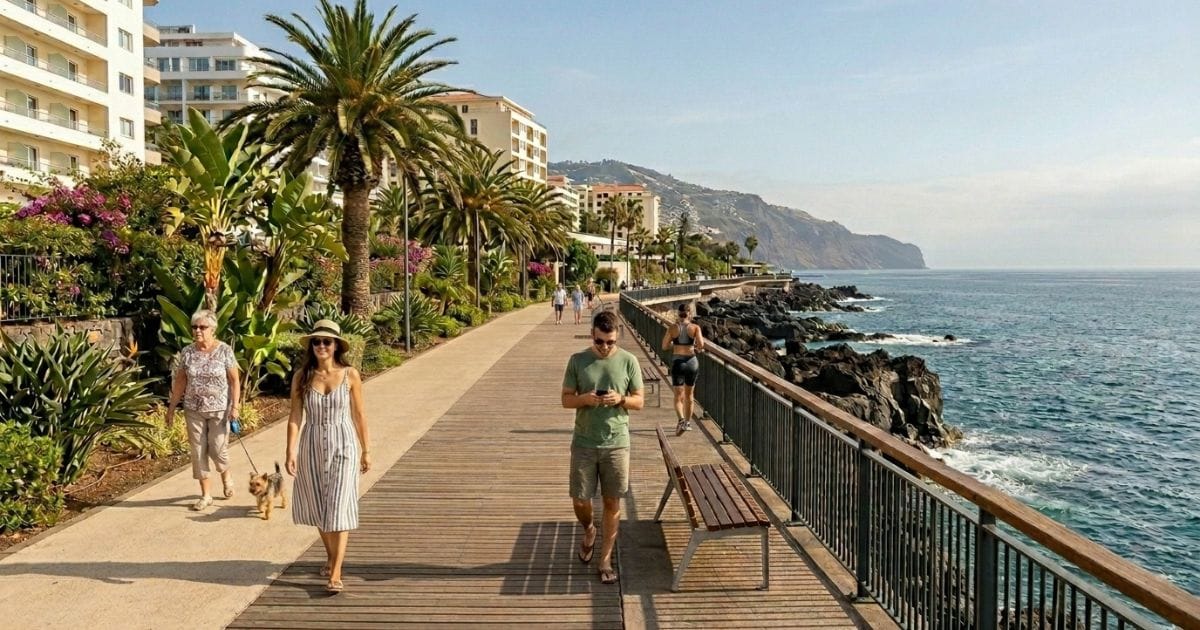
The walk from the Lido hotel zone to the old town waterfront (Zona Velha) takes approximately 25 to 30 minutes on this flat coastal route at a comfortable pace, genuinely level throughout, with the old town accessible at the eastern end. The old town streets themselves are laid on traditional cobblestone, so flat-soled shoes with grip are the right call once you leave the promenade.
What the route is not, and it is worth being clear, is an island-wide flat experience. Funchal sits in a natural amphitheatre that rises steeply inland almost the moment you leave the seafront. None of that is a problem if you know it in advance and have chosen your hotel accordingly. Every hotel on the shortlist in the full audit is positioned to give you that flat coastal access without compromise.
Are There Step-Free Hotels Near the Funchal Promenade?
Yes, and identifying them is exactly what the eight-point audit checklist is designed to do. Every shortlisted hotel in the full Funchal audit is within flat walking distance of the Promenade do Lido, confirmed to have passenger lift access to all accommodation floors, and cross-referenced against independent guest reviews for recent lift reliability. The hotel section below covers the three Standout Favourites; the full nine-property breakdown is in the free PDF.
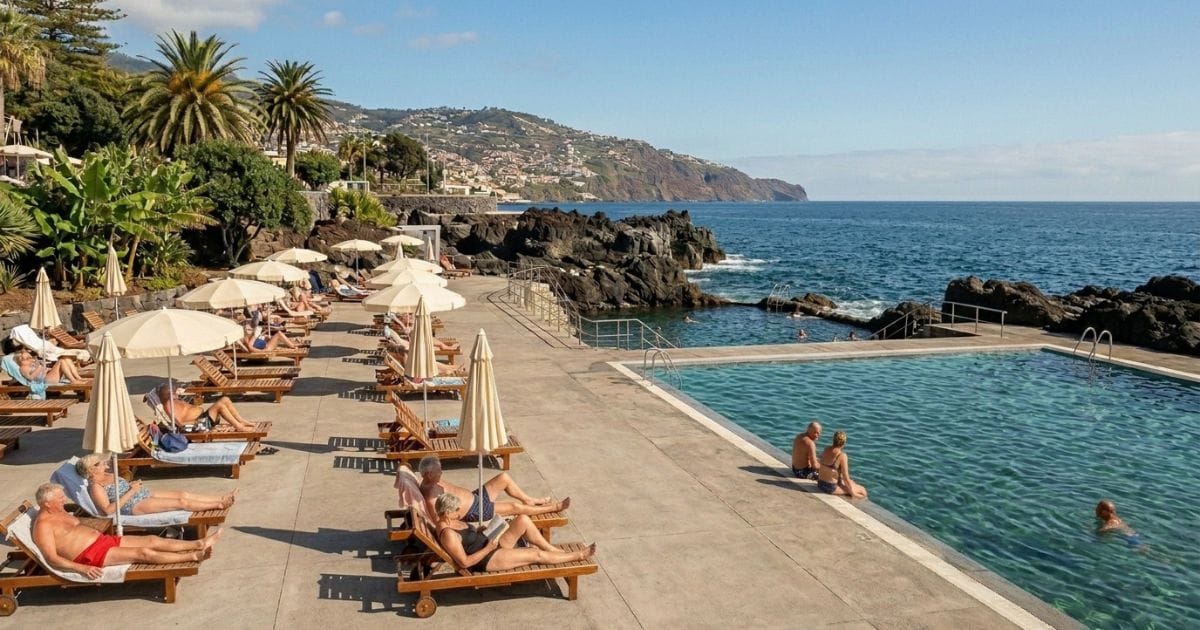
The Lido bathing complexes are worth a specific mention. Funchal does not have sandy beaches in the central resort area, but the lido complexes, Complexo Balnear da Ponta Gorda and the main Lido, are genuinely excellent: flat sun terraces, heated seawater pools, lifeguard cover, and direct ocean access that works particularly well for our demographic.
Climate and Timing: When to Visit Madeira
Madeira carries the description ‘Island of Eternal Spring’ for a reason; temperatures in Funchal remain moderate year-round, with the central hotel zone rarely dropping below 15°C in winter or exceeding 26°C at peak. The island’s subtropical position in the Atlantic means it avoids the extremes that make July and August genuinely difficult in southern Spain or Cyprus.
For our demographic, the two optimal windows are April to June and September to October. Temperatures in the low-to-mid twenties, quieter hotels, better availability for the preferred properties, and prices that reflect the off-peak period. The shoulder-season version of Funchal is, in most respects, a better experience than the peak summer one.
One seasonal caveat worth knowing: October to January is the wetter period on the island. Rainfall is concentrated in the north and the mountains; the south-facing Funchal coast is considerably drier, but extended overcast days are possible in November and December. Year-round indoor heated pools at the better hotels mitigate this entirely. The full audit flags which properties have confirmed year-round heated indoor facilities.
Worth flagging directly: August is Madeira's peak, with the highest prices and fullest hotels of the year, so if budget matters as much as guaranteed sunshine, build your trip around one of the shoulder windows above instead. September and October carry the bonus of Funchal's flower and wine harvest traditions, which bring a genuine burst of local colour to the city beyond the walking and dining already covered here.
The Food Is A Genuine Reason to Visit
There are destinations where eating well requires effort. Madeira is not one of them. This is an island with a cooking tradition entirely its own, shaped by deep-sea Atlantic fishing, mountain cattle farming, and subtropical agriculture, and the result sits on restaurant menus at prices that make most UK comparisons look expensive.
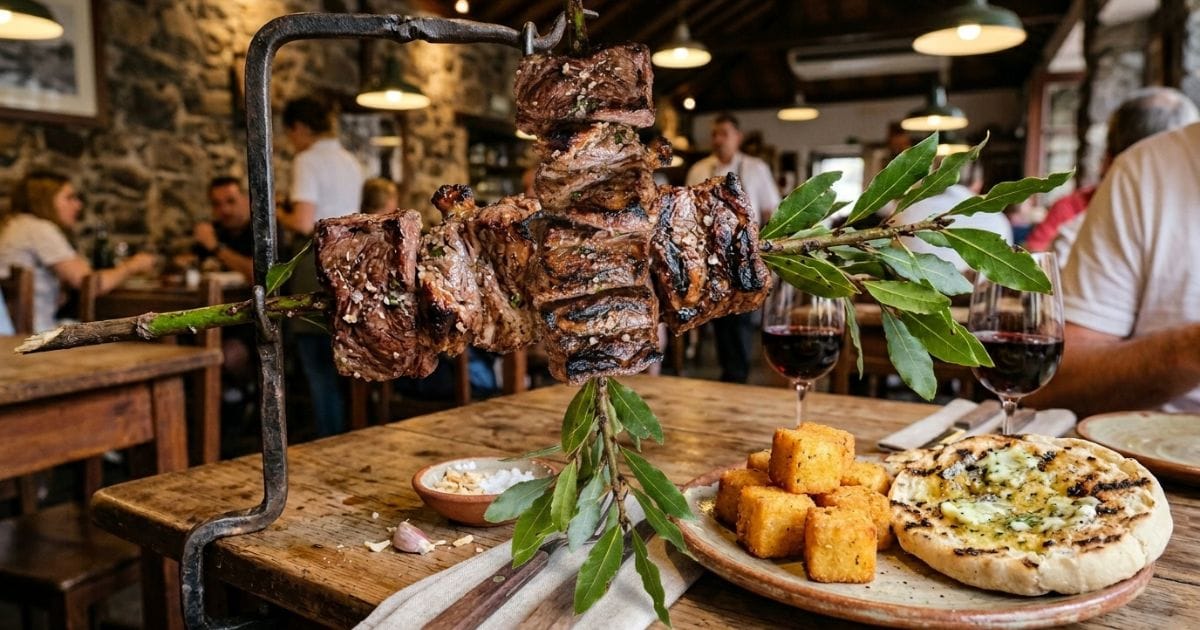
The two dishes that define Madeiran cuisine are the espetada and the espada. The espetada is beef, large pieces rubbed in coarse salt, garlic, and bay leaf, skewered on a fresh laurel branch, and grilled over wood embers. In a traditional restaurant, it arrives suspended at the table on a hook, and the meat is carved and shared. It comes with milho frito (herbed deep-fried cornmeal cubes) and bolo do caco, a sweet potato flatbread with garlic butter, a combination specific to this island and genuinely good.
The espada, peixe-espada preta, the black scabbardfish, is a deep-water species caught only around Madeira. White-fleshed and mild, it is typically served pan-fried with banana and passion fruit sauce in the tourist-facing version. Order the verdura version, and it comes with milho frito and boiled vegetables, the way locals eat it.
A three-course dinner for two at a mid-range independent restaurant runs between €45 and €57.50, roughly £38 to £49 at current rates. That is the kind of number that makes Madeira worth adding to the shortlist on food grounds alone. The one practical note: steer clear of the restaurant touts along the main Rua de Santa Maria strip in the old town; that stretch is oriented toward cruise ship visitors, and the pricing reflects it. The streets behind it and the cathedral backstreets are where the better value and the better food both sit. The full audit names them specifically.
Money, Mobile, and Day-to-Day Practicalities
Portugal uses the euro. Contactless payment is widely accepted across the Madeira tourist zone, with a €50 per-tap limit at most terminals. Cash remains useful at traditional cafes, market stalls, and smaller family restaurants in the back streets.
For ATMs: the reliable networks are Caixa Geral de Depósitos (CGD), Novo Banco, and BCP Millennium. The yellow-branded Euronet ATMs positioned in tourist areas charge additional fees and offer poor exchange rates; avoid them. As with any European destination, if an ATM offers to complete your transaction in GBP rather than euros, always decline. Dynamic currency conversion at the machine applies a significantly worse rate than your card’s own conversion.
Your phone will work in Madeira. Current roaming costs by UK network:
If you want to avoid roaming charges entirely, two options work well in Madeira. Local Madeiran SIM providers NOS and MEO both have kiosks in the arrivals hall at Cristiano Ronaldo International Airport, typically costing €10–20 for a week’s data. NOS has the strongest signal coverage on the island, specifically. Alternatively, switch off mobile data before landing and rely on hotel and restaurant WiFi, which is free and reliable throughout the Lido zone and old town. For most travellers staying in the hotel strip, WiFi coverage alone is more than sufficient.
Plug type: Type F (Europlug/Schuko); a travel adaptor is required for UK Type G plugs. Pack one before you leave; airport adaptor prices are significantly inflated.
Time zone: Madeira uses Western European Time, the same as the UK year-round. No time adjustment required.
Can I Use My GHIC Card in Madeira Hospitals?
Yes. The main public hospital, Hospital Dr. Nélio Mendonça, on Avenida Luís de Camões in central Funchal, operates a 24-hour emergency department, accepts the UK Global Health Insurance Card (GHIC) on the same terms as a Portuguese resident, and has a good reputation for English proficiency at the clinical level.
One practical detail worth knowing: if you attend A&E without a prior referral, a co-payment of approximately €14–€15 applies. Calling the Portuguese health helpline, SNS 24 on 808 24 24 24, before attending and obtaining a referral removes that charge entirely. Worth storing the number in your phone before you travel.
Two modern private hospitals, Hospital Particular da Madeira and Hospital da Luz Funchal, provide backup for those with comprehensive travel insurance, with English-speaking staff throughout and a 24-hour urgent care service at each.
Prescription medication deserves specific mention, since most of us are managing at least one by this stage of life. Carry it in its original, pharmacy-labelled packaging in hand luggage rather than checked in, along with a copy of your prescription or a GP letter confirming what you take and why. Controlled medications, such as strong painkillers or sleeping tablets, carry additional rules once you're carrying more than a small supply: current guidance is on GOV.UK under ‘take controlled drugs abroad’, worth checking before you travel rather than at the airport.
Madeira's climate is milder than a Mediterranean summer, but storage of anything requiring refrigeration, such as insulin, still needs a plan. Most hotel rooms include a minibar or small fridge; ask reception on arrival if a dedicated fridge is needed and one is not provided. Never leave temperature-sensitive medication in checked luggage.
If medication is lost or stolen, Farmácia do Lido, in the same stretch as the promenade and bathing complex, can often provide an emergency supply of common medications without a Portuguese prescription, particularly if you can show the original packaging or a photo of it. A local GP can issue a Portuguese prescription quickly against your documentation for anything requiring a formal replacement; keep your travel insurance provider's emergency line to hand, as most policies cover this consultation cost. CPAP machines and other medical equipment travel as hand luggage in addition to your usual allowance under most UK operators' medical equipment policies, worth confirming before departure rather than assuming it.
📥 Auditor's Note:
While the GHIC covers emergency care, it is designed to be a supplementary safety net rather than a substitute for comprehensive travel insurance. Standard travel insurance policies, the kind frequently bundled with bank accounts, premium credit cards, or holiday add-ons at checkout, routinely contain restrictive age-related ceilings or exclude pre-existing conditions entirely. To protect yourself from large unexpected out-of-pocket medical bills, including the £25,000+ reality of private medical repatriation, independent specialist cover is essential. In the post Over-50s Travel Insurance: Are You Actually Covered? I outline why generic insurance products often fall short, and introduce the two leading UK specialist medical providers I recommend, Staysure and AllClear, and why they matter for securing tailored cover.
Funchal Madeira Hotels: Three Standout Recommendations
The full audit assesses nine hotels across three price tiers, Essential, Classic, and Premium, each cross-referenced against the live 2026 inventories of Jet2holidays, easyJet holidays, and TUI, as well as an eight-point checklist: walk, wellness, A/C, showers, twin, quiet, lift, and solo. Every shortlisted hotel sits within a flat walking distance of the Funchal promenade.
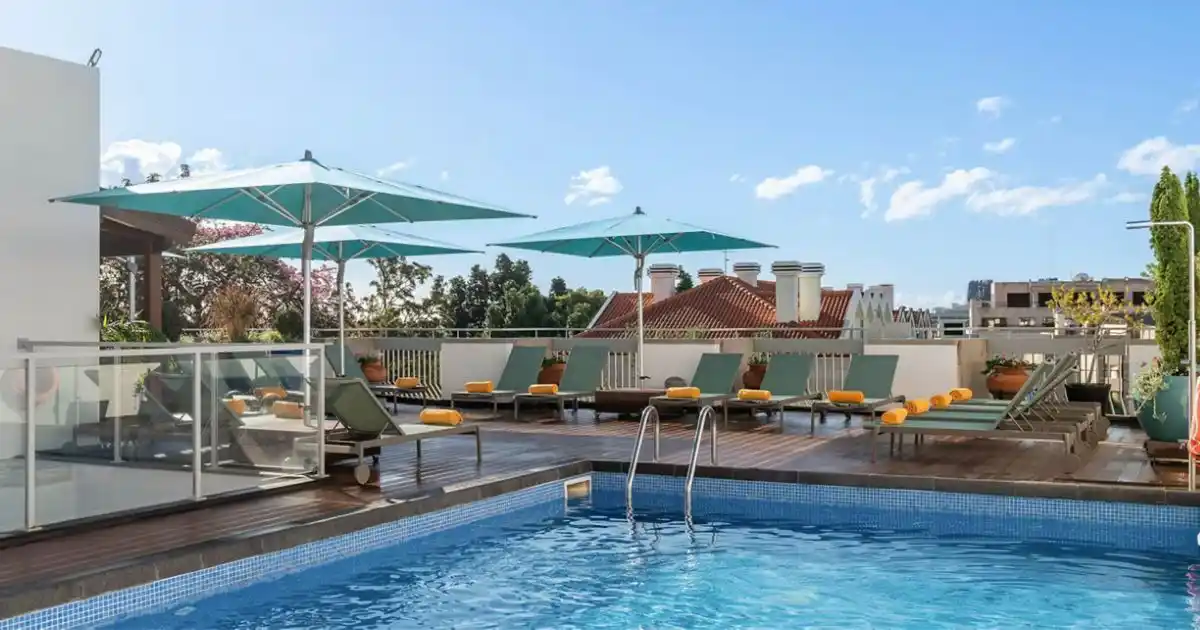
1. Essential Tier Standout, Hotel Madeira
Hotel Madeira sits in the dead centre of Funchal, five minutes flat on foot from the cathedral, the old town waterfront, and the marina. Walk-in showers are confirmed standard across all room categories with no booking request needed. It offers a dedicated single-room configuration, genuinely rare in the Funchal market, making it the strongest solo-traveller choice at this price point. Lift access to all floors is confirmed. No indoor heated pool, which matters for winter travel; the Classic tier picks up that gap.
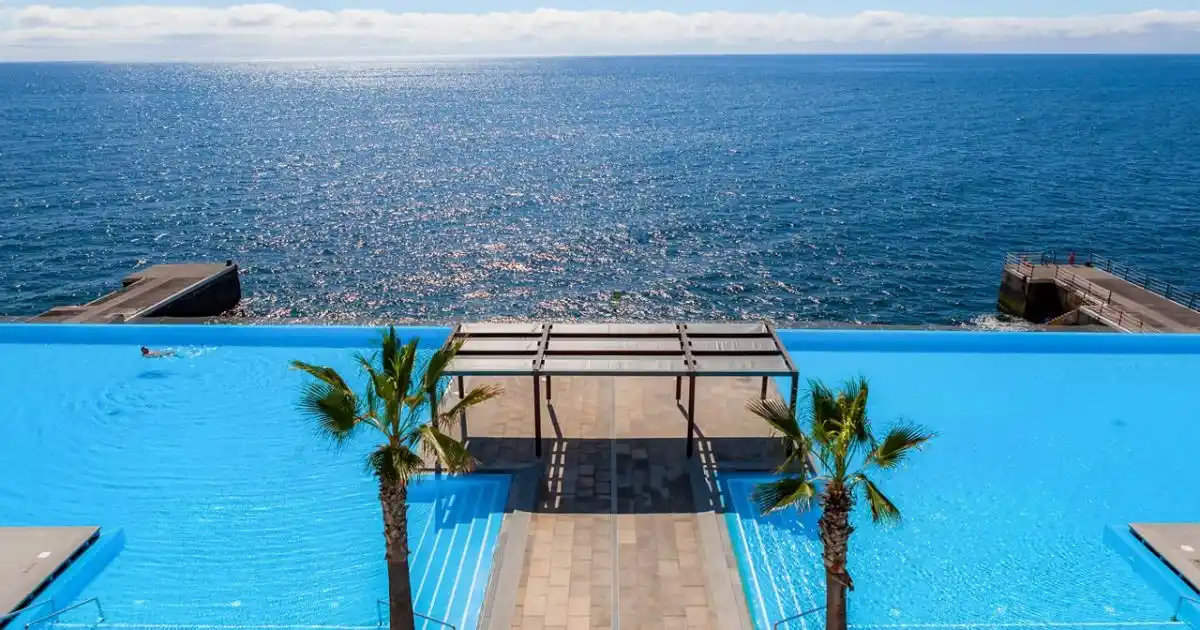
2. Classic Tier Standout, VidaMar Resort Madeira
VidaMar covers every criterion most cleanly in the Classic tier. Walk-in showers confirmed standard across all 300 rooms, the highest-confidence shower finding on the entire Funchal shortlist. Indoor heated pool and full spa year-round. All 300 rooms have private sea-view balconies as standard, guaranteed, not on request. The Promenade do Lido is a flat 15-minute walk.
Over 2,800 verified independent reviews across platforms with no significant caveats in my current research.
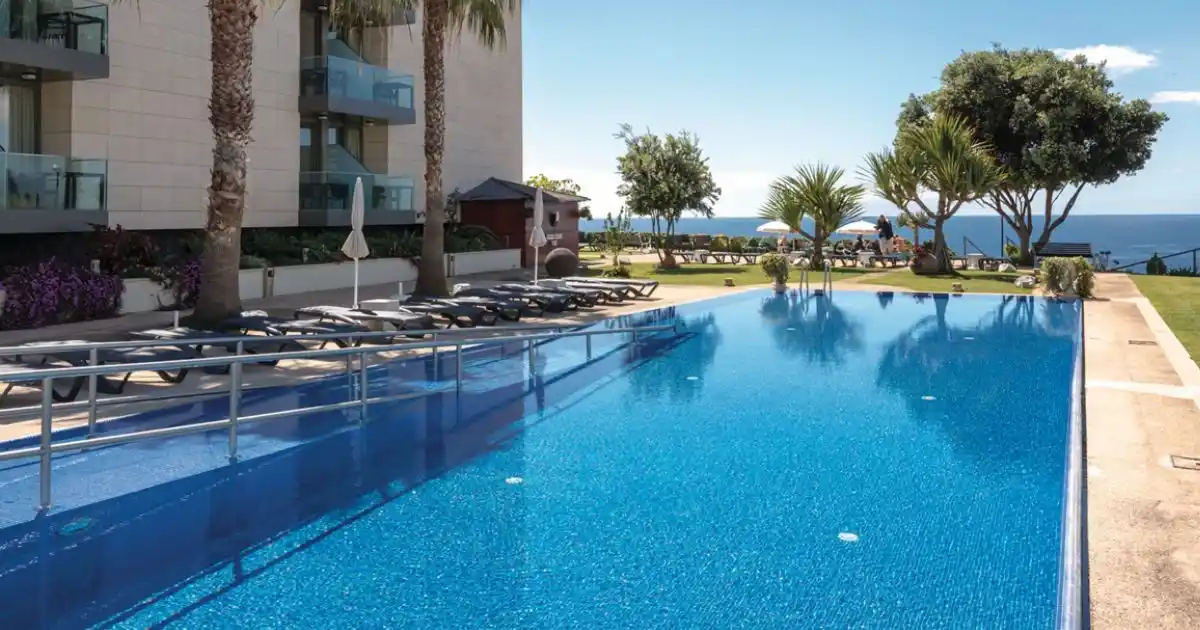
3. Premium Tier Standout, Golden Residence
Golden Residence sits on the clifftop above the Promenade do Lido, five minutes flat walk to the promenade and the Doca do Cavacas natural pools. Adult-oriented, consistently described as peaceful in independent accounts. Showers confirmed as standard across all room categories. The GoldenSpa is one of the more comprehensive hotel spa facilities at this price point in Funchal.
Booking Your Package Holiday: The UK Operators
If you are looking to book any of these audited properties as a fully protected ATOL package, the UK’s package holiday market leaders, Jet2holidays, TUI holidays and easyJet holidays, all offer extensive, direct itineraries from major UK and regional airports on their own secure websites, with these specific hotels featured in their respective Madeira collections.
Download the Full Destination Audit
A single online blogpost cannot do justice to a comprehensive, independent consumer report. If you are planning an over-50s holiday, my full, independent destination audit is entirely free and contains:
- A Destination Checklist: Getting there, suitability, food, healthcare and atmosphere.
- An 8-Point Hotel Checklist: Nine hotels shortlisted against real reviews, audited against an 8-point checklist covering lifts, shower setups, air conditioning, and more.
- A Solo Traveller Blueprint: Expanded advice for solo travellers over 50 and women travelling alone.
- The 2026 Discount Stacking Method: A step-by-step workflow for your online booking that ensures you smoothly trigger the full value of the operators' active pricing frameworks, routinely saving up to £170 on your final checkout.
- A Printed Directory: A collection of high-contrast QR codes designed for readers who prefer to print the guide out on paper.
Frequently Asked Questions: Madeira Holidays for the Over 50s
Is Madeira suitable for over-50s travellers?
Yes. Funchal has a flat 1.2-mile Promenade do Lido, year-round direct UK flights, GHIC-accepting public healthcare, and a strong selection of ATOL-protected package hotels meeting my eight-point accessibility checklist. The city rewards those who want a genuine destination experience rather than a sealed resort.
Is the Promenade do Lido flat and accessible?
The Promenade do Lido is largely flat, with benches every 50 to 100 metres, good lighting after dark, and a well-maintained surface throughout its 1.2-mile length. Minor undulations occur where the path contours around cliff sections, but there are no sustained gradients along the route.
Do UK visitors need EES biometric registration at Madeira Airport?
Yes. EES became fully operational in Portugal in April 2026. First-time registrants should allow one to two hours for passport control. Once registered, automated gates are available for all future Schengen entries.
Do UK citizens need ETIAS for Madeira in 2026?
No, not as of June 2026. ETIAS is scheduled for later in 2026 but has not launched. No pre-travel application is currently required for UK passport holders visiting Portugal.
Can I use my GHIC card at Madeira hospitals?
Yes. Hospital Dr. Nélio Mendonça in central Funchal accepts GHIC on the same terms as a Portuguese resident. Call SNS 24 (808 24 24 24) before attending A&E to obtain a referral and avoid an unreferred co-payment of approximately €14–€15.
What is the 2026 tourist tax in Madeira?
€2 per person per night, capped at seven nights (maximum €14 per adult per stay). Children under 13 are exempt. Collected by your hotel at check-in, not included in the initial operator booking price.
Is tap water safe to drink in Madeira?
Yes. Funchal tap water meets EU standards and is safe to drink and use for tea-making throughout the city and hotel zone.
How much does a taxi from Madeira Airport to the Lido cost?
A typical daytime metered fare runs €25–€35. A 20% surcharge applies after 9pm and all day on weekends and public holidays. Pre-booked private transfers typically run £20–£45 for a fixed-price direct service.
Which UK airports have direct flights to Madeira?
Year-round direct services from London Gatwick, Luton, Stansted, Manchester, Bristol, and Newcastle. Seasonal additions include Birmingham, Bournemouth, and Edinburgh. Packages are available through Jet2, easyJet, and TUI.
Do Funchal hotels have walk-in showers?
Walk-in shower provision varies significantly by hotel and room category. The full Funchal audit specifically verifies shower type across all shortlisted hotels, identifying which properties offer walk-in showers as standard and which require a specific written request at booking.
Why do so many older travellers visit Madeira?
The nickname "Island of Eternal Spring" is earned: mild temperatures year-round rather than punishing summer heat, flat promenade and levada walking without needing a rental car, and a British travel relationship going back generations, so the infrastructure for older visitors is mature rather than an afterthought.
What do Madeirans eat for breakfast?
Simple and bread-based, typically bolo do caco (a flat, garlic-butter griddle bread) alongside good coffee and whatever fruit is in season, custard apples and bananas both grow locally. It's a lighter start than a UK cooked breakfast; most hotels offer both.
When is the worst time to visit Madeira?
November through February brings the most rain, particularly on the north side of the island; the south coast around Funchal is milder but still wetter and greyer than the rest of the year. August is the other one to think about, not for weather but for price and crowds, it's the island's peak.
A Final Note on Accuracy
This audit was researched and verified in June 2026 and undergoes a full top-to-bottom refresh annually. Between editions, any material changes to EES/ETIAS timelines, hotel facilities, or operator inventories are sent directly to subscribers.
If you have recently returned from Funchal with a field observation, a correction, or a hotel update worth sharing, my inbox is always open. Every message is read, and verified updates go directly into the text.
"Wishing you a smooth arrival and a week worth remembering."
Robert
The Holiday Audit | theholidayaudit.co.uk
📥 Where Are You Heading Next?
Receive upcoming independent Destination Audits straight to your inbox as soon as they are published? Register for free community updates below.
The Holiday Audit covers the destinations that matter most to UK travellers over 50. If you are weighing Funchal against Cyprus, the Paphos audit is available here: Paphos, Cyprus.